
On Wintering
I'm combatting my seasonal depression by embracing the Scandi concept of Hygge

Welcome back to ‘Eyb, the newsletter in which I write frankly on taboo topics that growing up as an Arab woman I would be told were shameful or ‘eyb. I also write about topics affecting girls, women and marginalised communities. If you are recent subscriber, ahlan wa sahlan to you!
In October I thought about monetising this Substack. If you too are a writer or freelance journalist you will know that for the majority of us, doing this job, a job we love and are passionate about, doesn’t always bring the best return financially. I often think about what my life would look like right now if I was single and had to live off my income — I have freelance friends who are in that boat — and how I would probably need universal credit to make ends meet. I think everyone can agree, economically, things in the UK are really tough right now.
My attempt to monetise Substack failed. But recently, I read an essay here (unfortunately I can’t remember who penned it) about the constant push to monetise everything, and how many of us originally came to Substack because it was a space where we could write for writing’s sake.
So, I am back to free essays. However, if you do enjoy my writing and want to support my work, buying my semi-autobiographical debut novel Hijab and Red Lipstick is really helpful. It only costs £7.99. Recently, I had some very exciting news from my publisher — Hijab and Red Lipstick is being relaunched with a brand new cover in April! What’s even more exciting is soon it will also be available in the United States!

January is probably my least favourite month of the year and I know that’s the case for most people, except my dear Coptic and Orthodox Christian friends who will be celebrating Christmas next week — if that’s you, I hope you have a wonderful day with your family and loved ones!
Even though I don’t celebrate Christmas, the festive season is over, everyone is broke, the weather in the UK is freezing and the days are short.
We are in the depths of Winter and unfortunately for me it’s also the season in which my depression flares up. Once the clocks go back at the end of October and the days become shorter I feel my low mood instantly creep back in; I spend many days feeling mentally unmotivated, trapped, sad and I get this horrid sensation of constantly feeling like I am on the verge of crying.
I have done something about it — I was lucky enough to get myself on the waiting list for NHS CBT back in August and got off the waiting list and landed my free eight sessions of therapy just as Winter started. I know this is going to sound horrible — I have had ERP (Exposure and Response Prevention Therapy) on the NHS before for OCD which helped put my OCD back into remission — but this time round, I haven’t found the CBT for my generalised anxiety and depression has really helped me.
As usual, I have had to take matters into my own hands.
For the past few years I have been constantly reading about the Scandinavian concept of hygge (pronounced hoo-gah and NOT hy-ggi) and how over in Denmark this helps them lead a fulfilling joyous life even in Winter. You now hear the word hygge everywhere; it has become a bit of a lifestyle trend and of course homeware stores have capitalised on it. If you have seen the brilliant BBC comedy Motherland, (if you are a non-UK reader you can find it on Netflix), you will remember that Amanda had her little concept shop called hygge-tygge (which apparently in Danish means ‘cosy chewing’). Because of this, I just thought it was another passing lifestyle fad that the UK had adopted from their Scandinavian brethren and didn’t look into it.
However, when depression strikes and that horrible feeling of being trapped in a cyclone of despair does not shift, you start researching for cures. A close friend recommended Katharine May’s book Wintering, (which I HIGHLY recommend), and in it I learned all about hygge. It is hard to translate the Danish word into English in one word, but it has something to do with the art of creating a cosy environment, with finding a feeling of contentment and wellbeing, and with curating the feeling of peace and happiness by spending time with loved ones, people who you have meaningful connections with. While lighting candles, getting out cosy blankets and wearing cute jumpers and wooly socks is part of hygge, it is so much more than an aesthetic and has massive benefits for your mental health, as I explained in a recent Vogue Arabia article I wrote about the subject (read here).
Neighbouring Scandinavian countries have their own local terms for it; the Swedes call it lagom or mysig and the Fins call it sisu. It is all about slowing down and finding joy during the brutal Winter with its below-zero temperatures and lack of sunlight. It emphasizes finding joy in the things you already own as opposed to buying more; however it is not the equivalent to minimalism — you can still make small and meaningful purchases if you find joy in them, such as a good coffee or pastry (something the Danish are big on).
When you compare how much sunlight we get in the UK during January to Denmark, it actually is not that different. Today sunrise in Copenhagen was 8:38 am and in Yorkshire (where I am) it was 8:20am. The sun will set today in Copenhagen at 3:50pm and at 4:01pm in Yorkshire. See?
So, why do we Brits not have our own version of hygge? It makes no sense!
Hygge, lagom or sisu, the Scandinavian approach to Winter, and in general to life — getting out for slow mindful walks no matter the weather, creating a calm, inviting atmosphere at home, doing slow, restorative activities such as knitting, reading novels, jigsaw puzzles or colouring, and spending quality time with those closest to you — has been researched and as well as its mental health benefits, researchers have found it also helps people with chronic illnesses like cystic fibrosis, fibromyalgia and M.E. to manage their fatigue and pain.
I think one of the issues we have in the UK and the States is that we don’t slow down during Winter. We are still in rush mode. And that takes an incredible toll on both our mental and physical health; it is why, come January, we are so burned out. If you look at the rest of Mother Nature, it is in rest and hibernation mode. Animals, trees and plants are restoring themselves so that come Spring they can re-emerge full of life again.
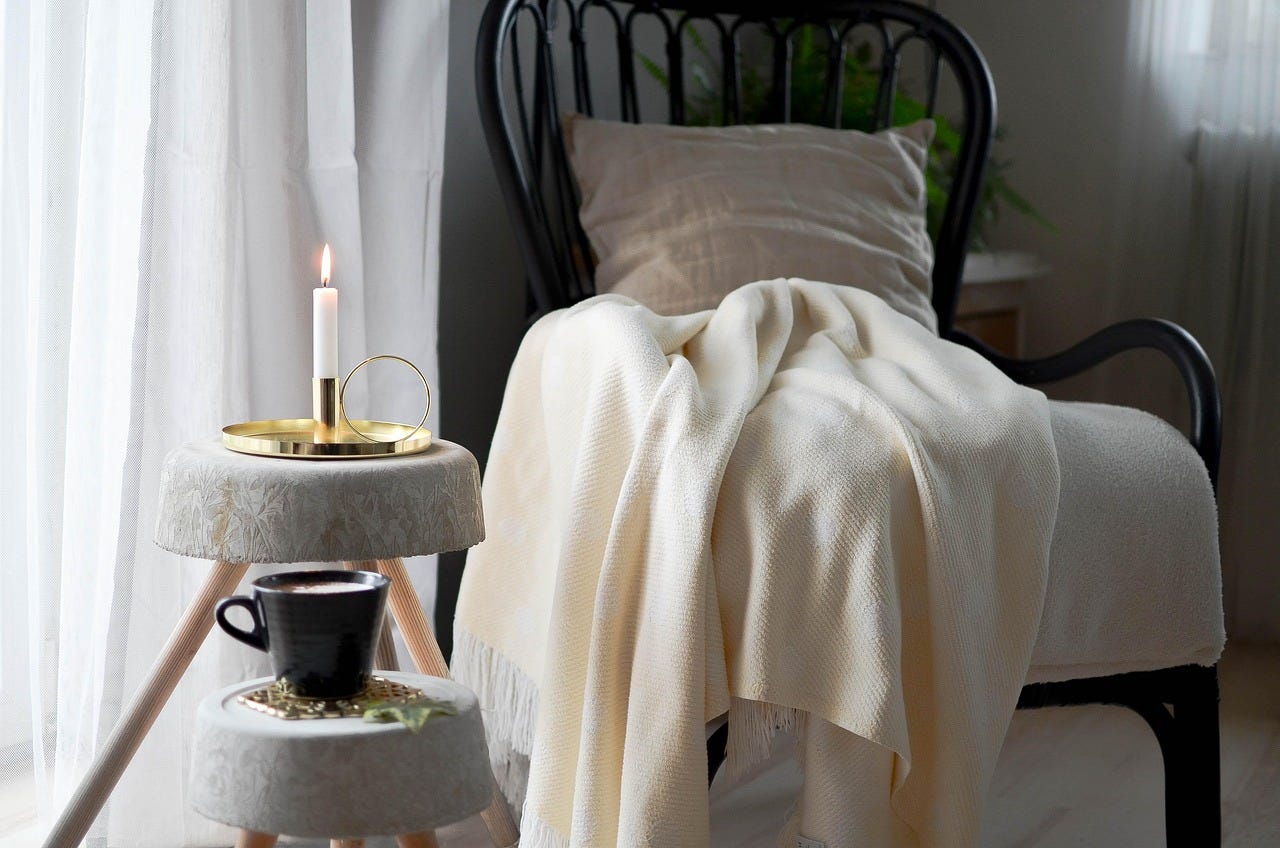
Image by janbrokes on Pixabay
So, this Winter, I am really Wintering. I am embracing hygge with slow, mindful walks, whether they be just around my block, the park or the nearby countryside. The minute the sun shines I open my front door and pop out just to feel it on my face for a few minutes (free serotonin, yes please!) I have actually bought my first 1,000-piece jigsaw puzzle and I have taken up colouring. I have embraced the Swedish practice of fika, setting aside some time in the mid-afternoon to make my husband and I a hot drink alongside with a croissant or slice of loaf cake (sometimes home-baked, sometimes not) and have a chat. I’d love to also take more naps, but that’s something of a rarity with a four-year-old who has dropped his last nap.
Has my seasonal depression fully gone? No, it hasn’t. But unlike previous winters where the season felt like it dragged on and I felt like I had forgotten how to feel happy, this Winter I am noticing the beauty in the season. I am relearning how to rest and find comfort at home. I am practising gratitude, and instead of going to bed each night with that horrible feeling of tightness in my chest and bottled-up grief, I feel somewhat calm.